

As customer demand surged—particularly at the onset of the COVID-19 pandemic starting in June 2020—the existing onboarding process struggled to scale. What was once manageable quickly became a bottleneck, with onboarding timelines stretching to an average of 4–6 weeks.
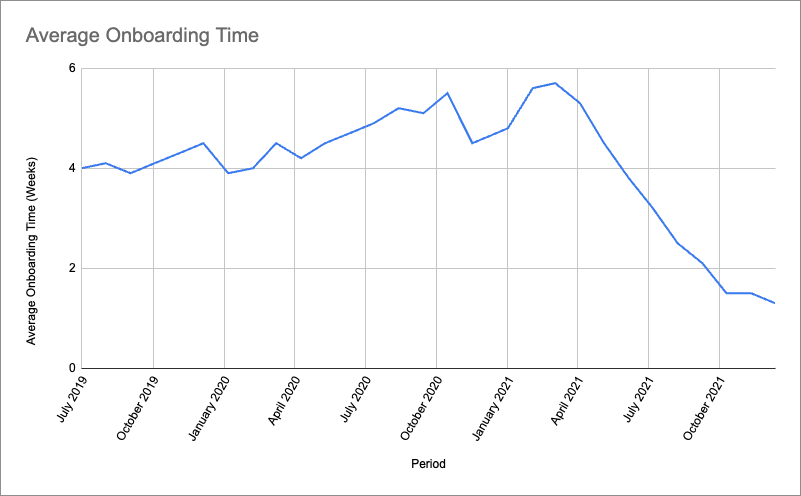
This strain exposed significant pain points for both customers and internal teams. Handoffs between teams were unclear, communication gaps widened, and accountability became fragmented. The result was a disjointed experience that led to internal friction and customer confusion.Before designing a solution, I approached this challenge through a Human-Centered Organizational Design lens—prioritizing the people involved in the process as much as the process itself.
Core objectives:
At the time, there was no comprehensive view of the onboarding workflow. Each team operated with a limited understanding—focused only on their specific responsibilities and immediate handoffs. This lack of visibility created a siloed organization, where miscommunication and inefficiencies became inevitable.
Over the course of 3 months, I facilitated cross-functional workshops and working sessions with process owners to document and validate every step of the onboarding journey.
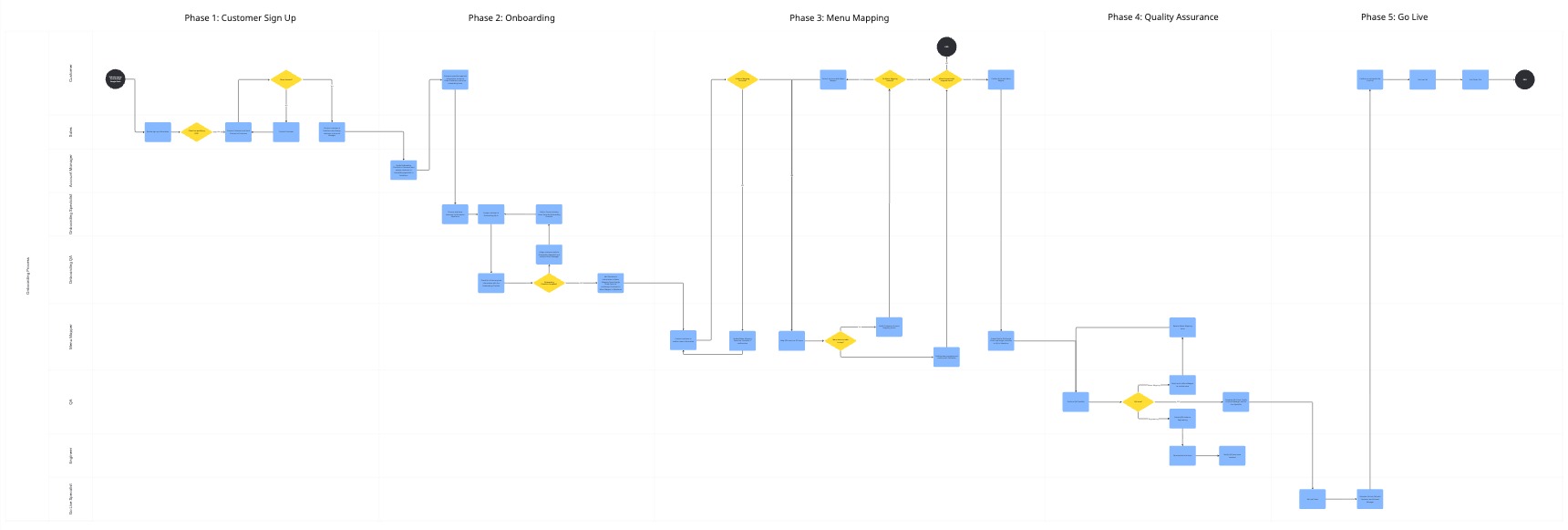
Key outcomes:
This exercise revealed significant redundancies, delays, and breakdowns in communication—many of which had gone unnoticed.
A critical insight from mapping the onboarding process was the fragmented nature of the tools used across teams. Rather than operating within a unified system, the onboarding workflow relied on a combination of disconnected platforms:

While each tool served a specific purpose, the lack of integration between them created operational inefficiencies. Teams were required to manually transfer information across systems, increasing the risk of errors, delays, and miscommunication. This fragmented ecosystem also contributed to limited visibility—no single source of truth existed for tracking onboarding status end-to-end.
Key challenges identified:
These insights directly informed both the process redesign and the direction of the onboarding portal. The goal was not to replace every tool, but to create a centralized experience layer that streamlines workflows, reduces friction, and provides a unified view of the onboarding journey for both internal teams and customers.
With a clear understanding of the current state, we systematically streamlined the process by eliminating redundancies and rethinking when and where customer interactions were necessary. One key improvement involved the menu mapping workflow. Previously, the menu mapping team paused their work to confirm menu accuracy with the customer—introducing delays and additional touchpoints. We restructured this step by shifting validation earlier in the process to the onboarding specialist. This allowed the menu mapping team to begin work immediately, only reaching out to customers when issues arose or proceed to the next phase when at least 95% of the menu is mapped correctly.